
How to use these Foster City garage door guides
The blog supports the service pages by explaining what to notice before a repair call. It keeps claims practical, avoids copied sales blocks, and gives Foster City callers safer language for springs, openers, sensors, seals, rollers, and maintenance decisions.
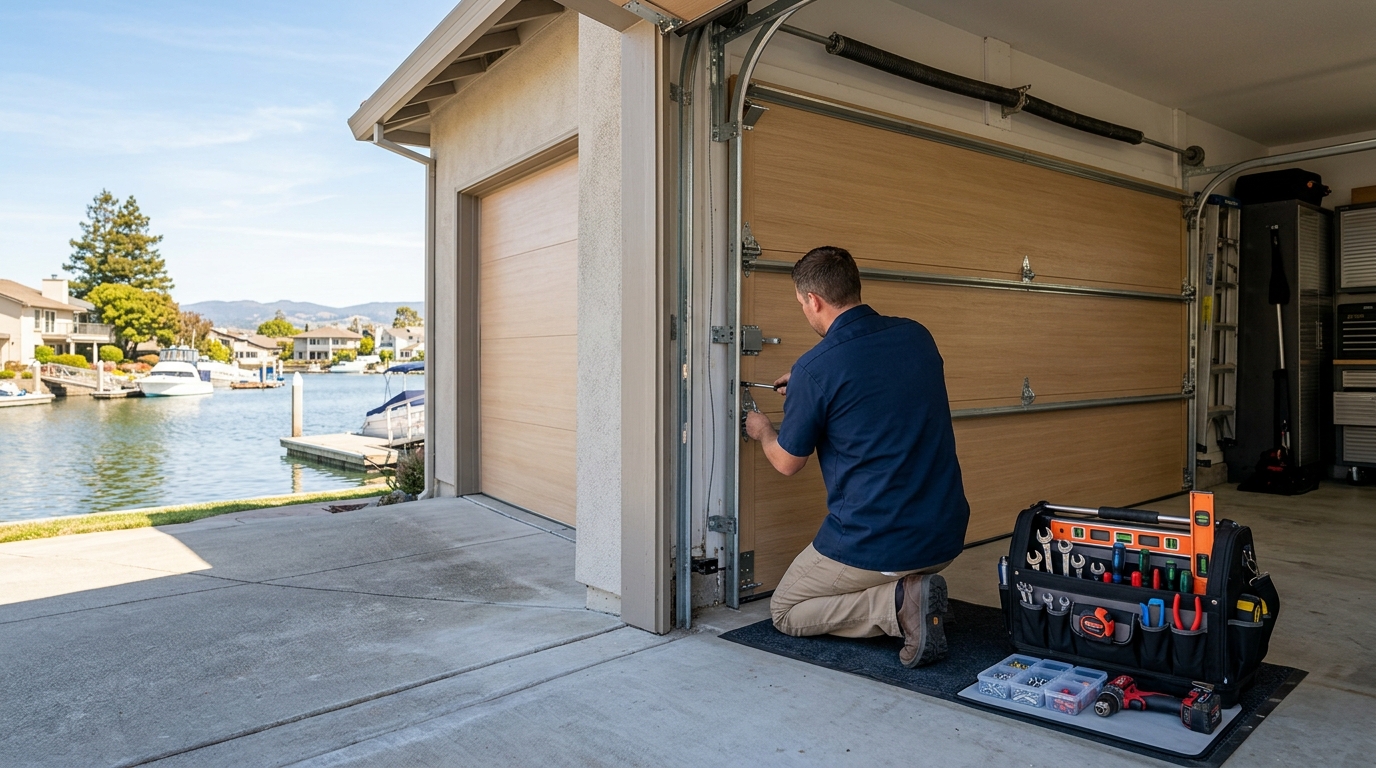
Lagoon air, attached garages, townhome access, and daily commuter routines can all change how a garage door problem feels. A noisy roller may be more noticeable in an attached garage. A tired bottom seal may matter more near water. A stuck door may be more urgent when it traps a vehicle before work.
The verified phone for this site is (650) 402-2110. Every blog post links back to the right call path and the contact form for normal scheduling questions.
Spring guide preview
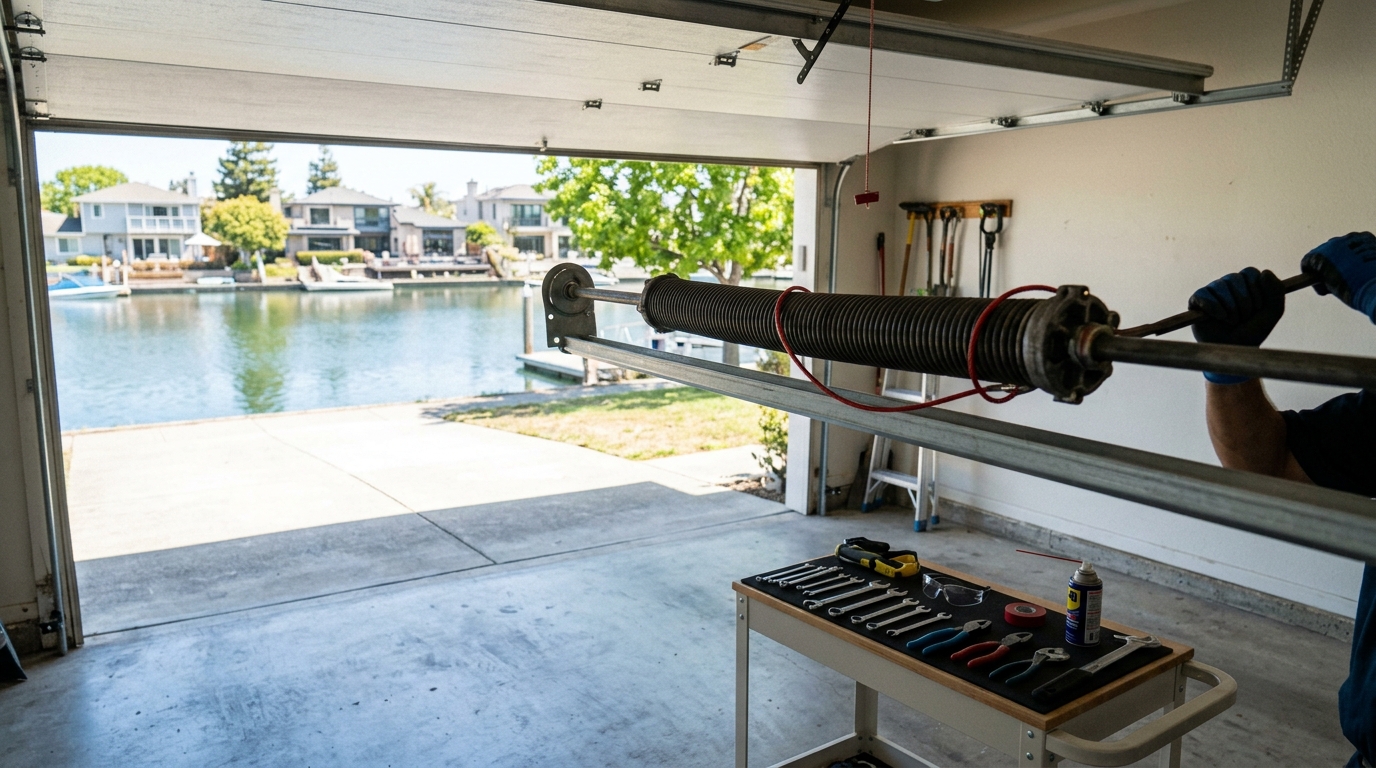
The spring safety guide is written for a heavy, crooked, or suddenly loud door. It explains why the caller should describe the door position and visible symptoms instead of touching torsion springs, extension springs, cables, drums, or bottom brackets. Foster City garages often connect to daily parking routines, so a trapped vehicle or unstable door should be named early on the call.
That guide also explains why opener strain can point back to door balance. If an opener lifts only a few inches, reverses, hums, or stops under load, the motor may not be the root issue. A spring-balanced door should move with controlled weight, and a sudden change in that weight is a safety signal.
Readers are reminded to keep the phone path consistent. The Foster City .net number is (650) 402-2110, and the page does not route callers through nearby sister-domain phone numbers.
Opener guide preview
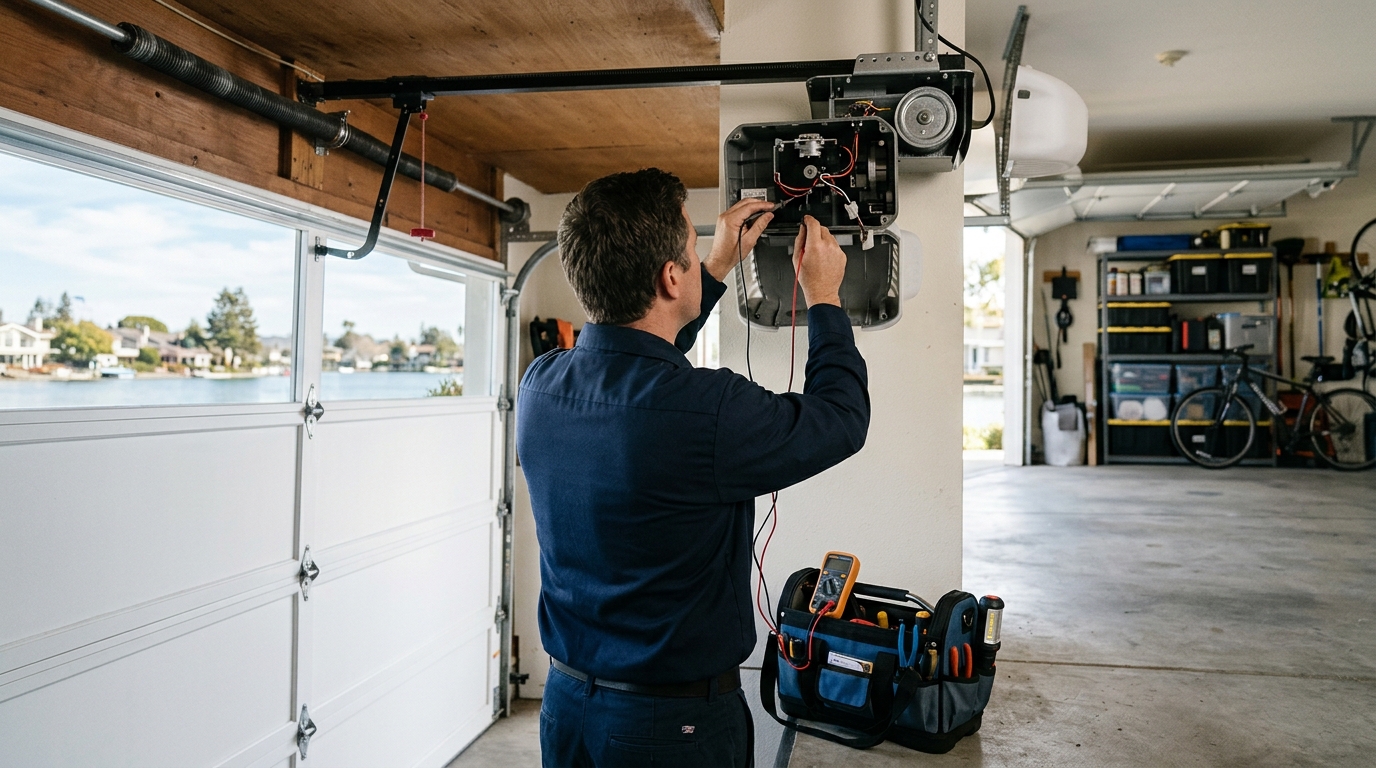
The opener troubleshooting guide separates simple checks from unsafe work. A homeowner can look for power interruptions, remote batteries, wall-console locks, obvious sensor blockage, and manual lock engagement. If the rail moves against a stuck door, the door is crooked, or the opener strains, the safer next step is to call and describe the symptom.
Attached garages make opener noise more noticeable, especially when rollers, hinges, or balance are changing. The guide helps callers describe humming, clicking, flashing lights, grinding, reversing, and intermittent remote behavior without assuming every symptom means a new opener is needed.
The opener article links back to opener repair, opener installation, sensor repair, and the contact form, so visitors can move from learning to action without landing in a dead end.
Lagoon maintenance guide preview
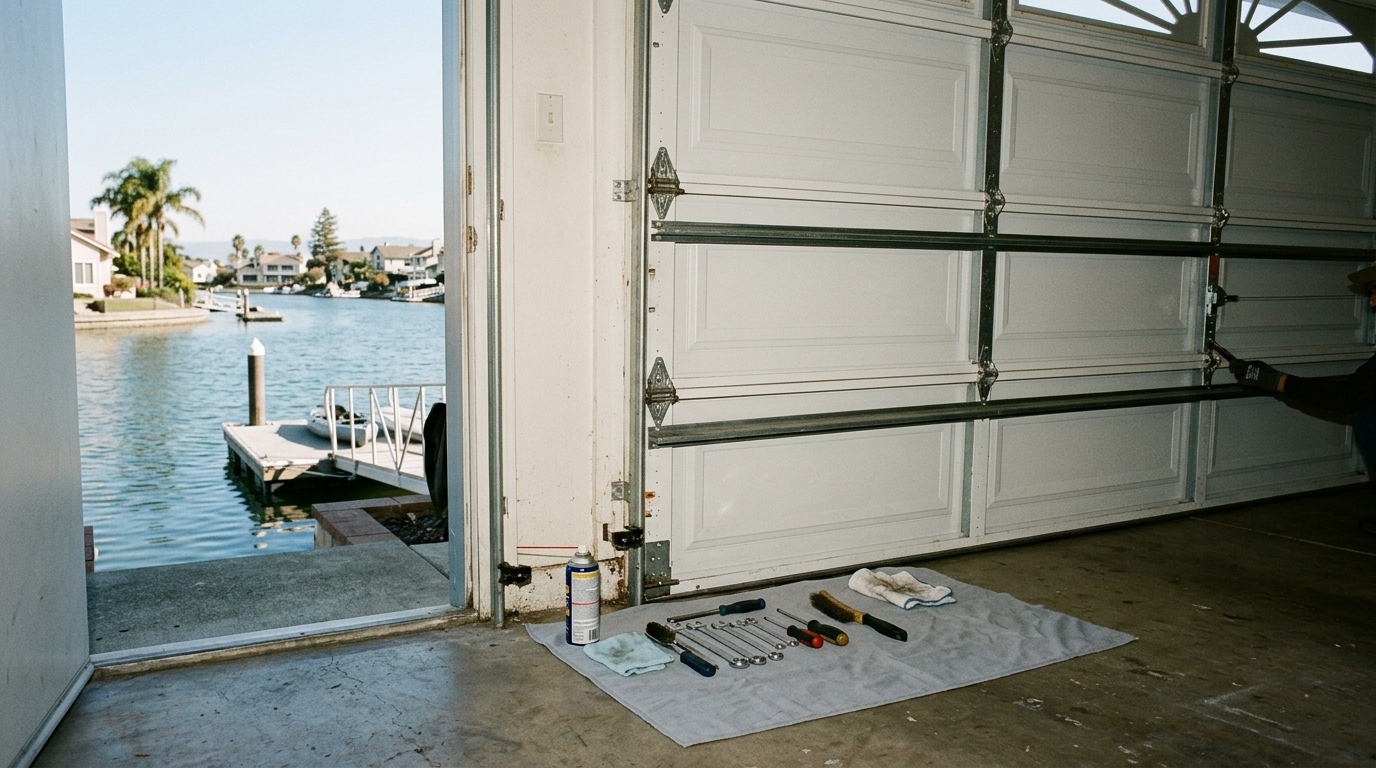
The lagoon maintenance guide focuses on Foster City realities: marine air, bottom seals, side seals, rollers, hinge noise, opener strain, and daily commuter cycles. It treats maintenance as practical prevention, not as a promise that every part will last indefinitely.
Bottom seal gaps can bring light, drafts, moisture, or debris into the garage. Rollers can become noisy before they fail. Tracks can collect small alignment issues that show up as rubbing, scraping, or uneven movement. These symptoms are easier to describe when the guide gives visitors a checklist.
Maintenance guidance connects to service pages for tune-ups, rollers, tracks, weather seals, springs, and openers. That structure keeps the site useful for both immediate repair calls and calmer planning calls.
When to call instead of testing
Call instead of experimenting when a door is hanging, crooked, very heavy, stuck open, stuck closed with a vehicle inside, or visibly damaged around cables, springs, drums, or bottom brackets. Those symptoms can change quickly and should not be solved by forcing the opener through more cycles.
For normal scheduling questions, the contact form collects name, email, phone, service type, message, and consent. It is not a replacement for safety judgment when the door is unstable. The form and the phone number are visible throughout the rebuilt site.
How the guide network supports service pages
Each article is connected to a service page because visitors usually begin with a symptom, not with a perfect repair category. A caller may say the door will not open, but the cause could be a spring, cable, opener, sensor, track, roller, or manual lock. The blog gives the caller a way to describe what happened, then the service page explains the repair category in more detail.
This matters for Foster City because many garages serve as daily vehicle access, storage, and attached-home entry at the same time. When a garage door stops working, the problem is not just mechanical. It can affect parking, security, noise, weather sealing, and whether someone can leave for work. The guide system is built to make that conversation clearer.
Instead of hiding every detail behind one contact button, the blog sends readers to spring repair, opener repair, sensor repair, maintenance, weather seals, replacement planning, and area pages. That internal structure lets a visitor choose the next useful page without being forced through a thin sitemap.
What visitors should gather before calling
A good call starts with observations. Is the door open, closed, crooked, or stuck halfway? Did the opener hum, click, flash, reverse, grind, or stay silent? Is there a visible spring gap, cable slack, roller jump, bent track, broken hinge, dented panel, or light gap under the seal? Those details help the conversation move faster and reduce guessing.
Photos can be useful when they show the door from a safe distance, but no visitor should put hands near cables, springs, drums, bottom brackets, or a door that is hanging unevenly. The point of preparation is not to perform the repair. The point is to give the technician accurate language while leaving high-tension parts alone.
The same preparation helps normal scheduling requests. If the issue is noise, describe when the noise appears in the cycle. If the issue is a remote, describe whether the wall button works. If the issue is a seal, describe whether the gap is at the bottom, side, top, or a panel joint. The more concrete the symptom, the better the first conversation.
Why Foster City details stay in the copy
Foster City is not an abstract service area. Lagoon-side air, attached garages, townhome parking, shared driveways, bay wind, and daily commuting all shape how a garage door problem feels to the customer. Those details belong in the copy because they help a local reader recognize their own situation.
Marine air can make seals and exposed hardware worth watching. Attached garages make vibration and opener strain more noticeable. Townhome layouts can make a stuck vehicle more disruptive. A guide that names these details gives the visitor something useful instead of a generic paragraph that could belong to any city.
The site also includes nearby-city pages for San Mateo, Burlingame, Redwood City, Menlo Park, South San Francisco, Palo Alto, Union City, and Newark. Those pages are written as nearby service-area context while keeping the Foster City .net phone route consistent.
How the contact path is protected
The contact path asks for the essentials: name, email, phone, service type, message, source page, and consent. It also includes anti-spam fields that normal visitors do not see. The phone number remains visible in the header, footer, article pages, and contact forms so the site does not depend on a single button.
The rebuilt blog keeps the Foster City .net number separate from nearby sister domains. That is important because a wrong number can send a garage door lead to the wrong business route, confuse structured data, and make the site look unfinished. The blog repeats the verified phone in normal customer language, not as an internal status line.
Visitors can use the form for ordinary scheduling details, but unstable door symptoms should be handled by phone. If the door is hanging, crooked, very heavy, or trapping a vehicle, the safer move is to call and avoid more opener cycles until the condition is understood.
Reading order for common problems
For a door that will not open, start with the opener troubleshooting guide, then compare the symptom against spring safety and cable repair pages. For a loud or shaky door, read the maintenance checklist before the roller, track, and tune-up pages. For an older door that has been repaired several times, review replacement cost, new installation, and panel replacement before deciding what question to ask on the call.
This reading order keeps the blog useful without making the visitor diagnose the door alone. The pages give language, safety boundaries, and next links. The actual repair decision should still be based on the door condition, visible damage, balance, opener behavior, and the details shared through the verified Foster City phone path.